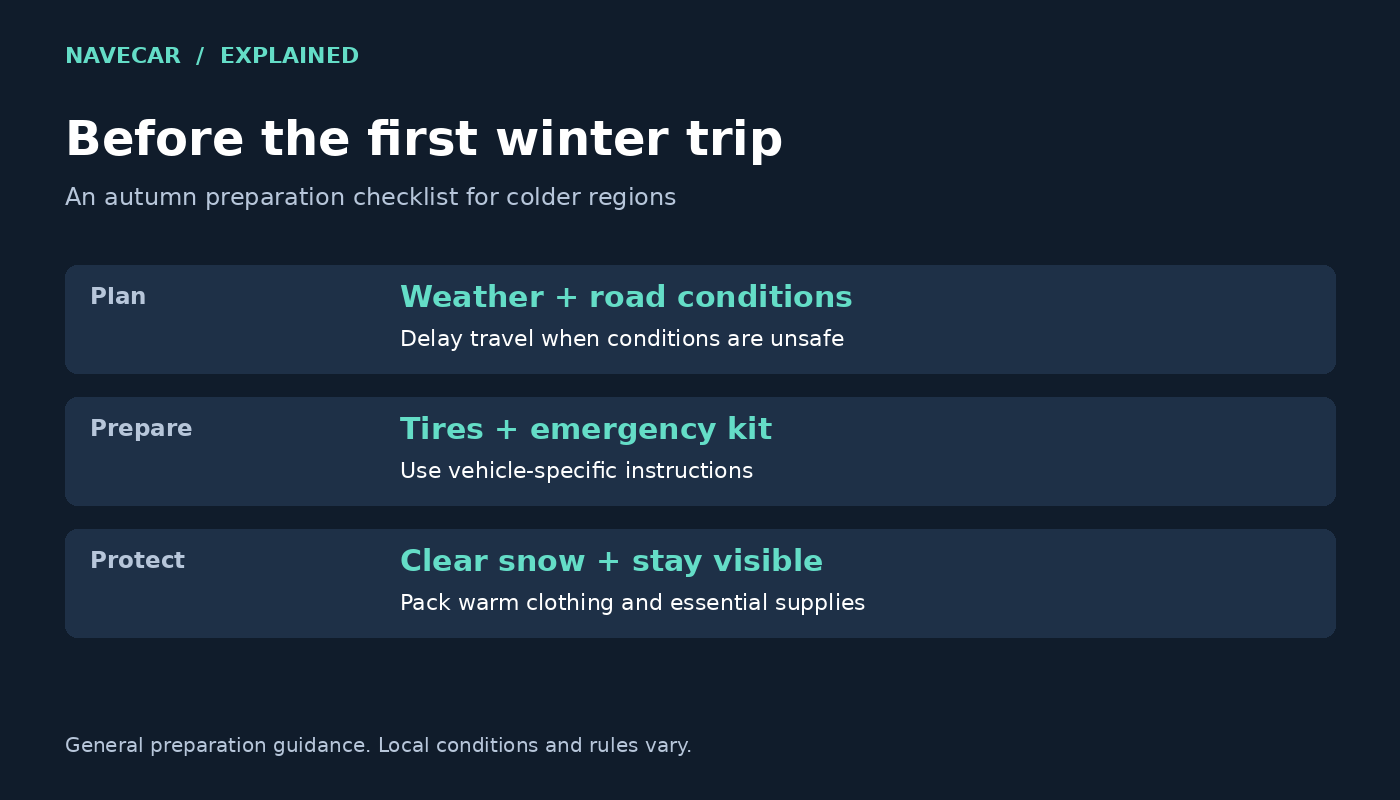
New York’s Winter Weather Awareness Week ran October 25–31, with the National Weather Service and state emergency-management officials urging residents to prepare before severe conditions arrive. Its advice offers a useful starting point for drivers planning cold-weather travel, while local weather and road requirements still need a separate check.
The NWS campaign recommends checking the battery, coolant, wipers, tire inflation and tread, and preparing vehicle survival supplies. It also recommends postponing travel during major storms when possible.
Start with the route and conditions
Check forecasts for the full route, including higher elevations or exposed sections, rather than only the departure city. Review official road closures and restrictions before leaving. Keep an alternative plan for delaying the trip or changing the destination.
Advertisement
For national-park trips, the National Park Service’s winter-driving guidance specifically calls for checking park alerts and tire-chain requirements. Some parks require chains or cables in particular conditions; those requirements are destination-specific. NPS also advises preparing to navigate where mobile service is unavailable.
Save the relevant route information before departure and tell someone where you are going and when you expect to arrive. For a longer trip, identify practical places to stop if conditions deteriorate.
Prepare the vehicle using its own instructions
Use the owner’s manual and applicable tire guidance for specifications and service needs. Have a weak battery, damaged tire or ineffective defroster addressed before relying on the vehicle in cold weather. Ask a service provider to identify the actual condition or measurement behind a recommended repair.
NPS recommends checking battery condition and defrosters, replacing worn wipers and using freeze-resistant washer fluid. Those checks address different problems: starting the vehicle, keeping the glass clear and maintaining visibility while driving.
A preparation visit should produce a clear list of what was inspected and what needs attention. Keep that record with your travel information so the same concern is not left unresolved between appointments.
Pack for a delay away from home
NPS lists warm clothing or blankets, food, water, a phone and portable charger, a flashlight, emergency markers, a shovel and an ice scraper among useful supplies. Choose quantities and items that fit the travelers, route and expected conditions.
Store essential supplies where they can be reached if luggage fills the cargo area. Check that lights and chargers work, and consider the needs of children or anyone carrying essential medication.
If a winter trip becomes unsafe, equipment is only part of the response. Delay travel when appropriate, follow official instructions and allow extra time. NPS advises slower driving and a greater following distance on slippery roads; a prepared vehicle still needs conditions and driving decisions to match.